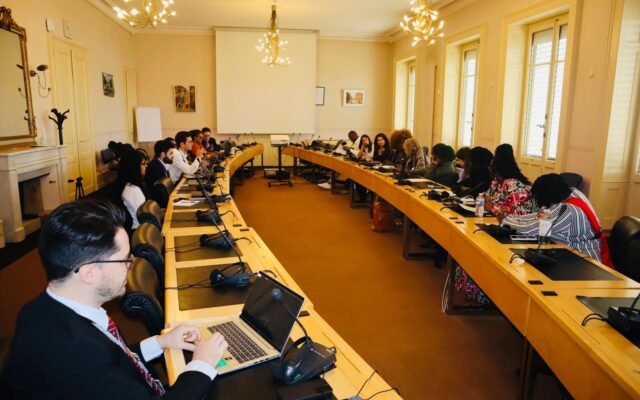
VNDI is cited in the series that offers an overview of the Black population with disabilities in Brazil.
Original article: https://www.gov.br/mdh/pt-br/assuntos/noticias/2023/novembro/novembro-negro-um-panorama-sobre-a-populacao-negra-com-deficiencia-no-brasil
The Ministry of Human Rights and Citizenship (MDHC) has started a series of articles on the anti-racist struggle to mark “Black November” – with the aim of reflecting on Black Consciousness Day, on the 20th. The first report offers an overview of Black people with disabilities in Brazil.
According to data from the National Household Sample Survey (Pnad): People with Disabilities 2022, more than 54% of people with disabilities self-identified as Black or brown. They thus represent a large share of the community of people with disabilities in Brazil.
These statistics shed light on the complex intersections between ethnicity and disability, highlighting how Black people with disabilities face additional challenges in access to rights, accessibility and equal opportunities.
Access to rights
According to the National Secretary for the Rights of Persons with Disabilities, Anna Paula Feminella, racism and ableism widen social inequalities. “The combination of racism, sexism and ableism not only worsens this exclusion but often causes suffering and the death of Black people,” she said.
Social groups such as Black people and people with disabilities have commonly been silenced throughout history. “For a group such as Black people with disabilities, the difficulties tend to be even greater. That is why attention to these marginalized groups is a priority for the government,” said the secretary, stating that these prejudices must be confronted with a new cycle of public policies.
The article cites the report we presented to the Committee on the Elimination of Racial Discrimination in Geneva on November 16 and 17, 2022. In it we point out that only 0.6% of Black people with disabilities manage to access higher education at the country’s public universities. Another alarming figure in the report is that 42.9% of Black women with disabilities are more vulnerable to violence.
To read our full report, click here.