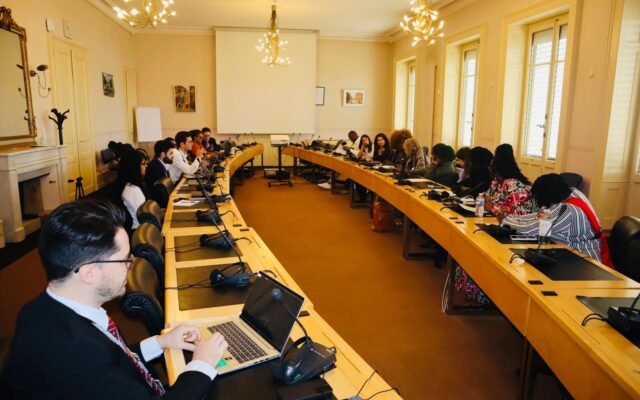

The UN Committee on the Elimination of Racial Discrimination (CERD) has made historic recommendations on intersectional discrimination on the grounds of race and disability to the Brazilian government.
These recommendations directly echo recommendations made by Minority Rights Group (MRG) and its partners, Vidas Negras com Deficiência Importam, Brazil, and the University of York, United Kingdom, in an alternative report on the situation of Black people with disabilities submitted to the committee. The meeting took place on December 2, 2022.
The Committee’s concluding observations echoed a total of eleven mentions of intersectional disability discrimination and five of the alternative report’s recommendations.
One of CERD’s recommendations is to provide adequate funding to collect disaggregated data, focusing on the “situation of Afro-Brazilians, Indigenous peoples and quilombolas facing intersectional forms of discrimination, including those with disabilities and/or who identify as LGBTQI+” – a key recommendation of the alternative report.
“This is a moment worth celebrating,” says Lauren Avery, MRG’s director of intersectional discrimination of minorities and disabilities and one of the lead researchers who worked on the alternative report. “Intersectional discrimination is often overlooked because of its complex causes and lack of data. We are excited that our research has brought these issues to light in Brazil and is being used to make important policy recommendations. This is a step toward the change needed for Black people with disabilities.”
Other recommendations based on the project team’s work included paying for care work done by Black women, implementing comprehensive anti-discrimination laws and renewing Brazil’s education quota system.
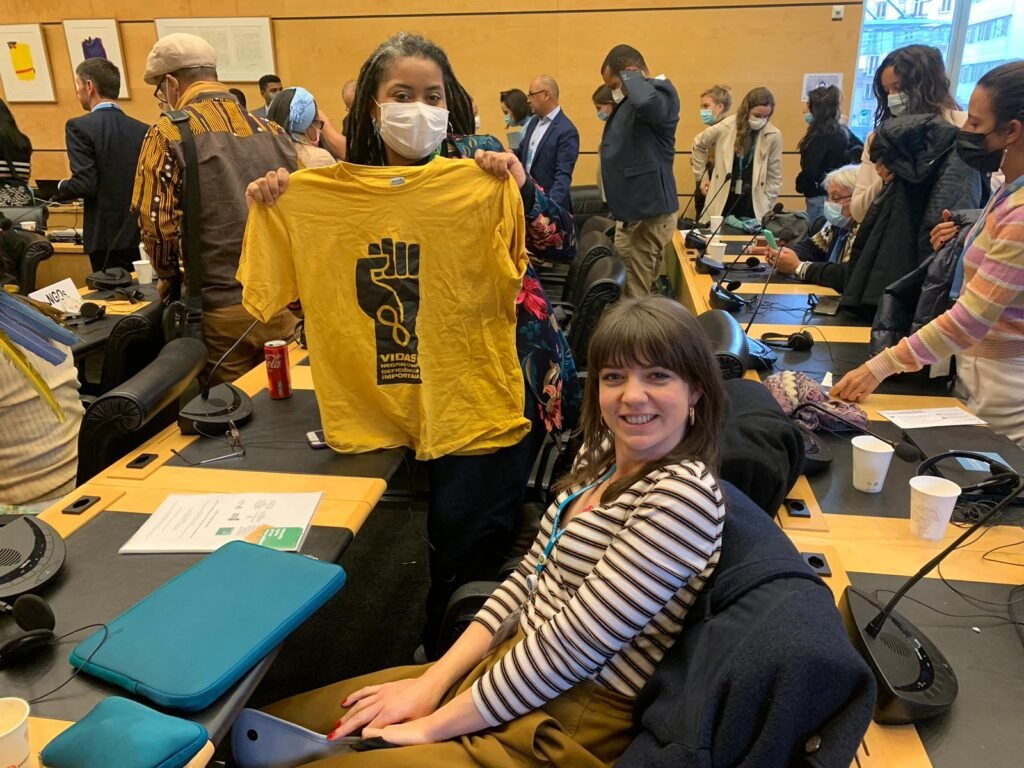
“This is one of the most important moments for Brazil and its debate on double discrimination,” says Luciana Viegas, a Black autistic activist, director of Vidas Negras com Deficiência Importam in Brazil and another lead researcher on the alternative report. “First because Black people with disabilities are being remembered and coming out of invisibility, signaling to the world that we too are subjects of rights.”
The project team recently delivered a statement to the UN committee last month and is carrying out other advocacy initiatives to highlight the higher rates of violence, unemployment, restricted access to education, health problems, fewer economic opportunities and marginalization from social and political participation experienced by Black people with disabilities in Brazil.
Black people in Brazil are significantly more likely to live in physically inaccessible areas lacking adequate sanitation, lighting or drainage. As a result, Black people with disabilities are among the most vulnerable in Brazilian society; they are over-represented among homeless, incarcerated and institutionalized populations.
The recommendations were made in CERD’s final report, after its review of the Brazilian State during the Committee’s 108th Session. These concluding observations are released one day before the International Day of Persons with Disabilities, proclaimed in 1992 by the United Nations General Assembly. Observance of the Day aims to promote an understanding of disability issues and mobilize support for the dignity, rights and well-being of persons with disabilities. However, minorities and Indigenous people with disabilities continue to be the most left behind.